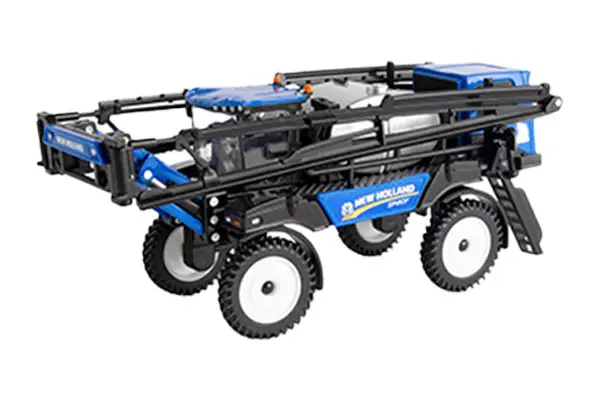







Self-propelled sprayers are among the most technologically advanced machines in modern farming. At Messick’s, we showcase New Holland self-propelled sprayers that deliver cutting-edge precision, efficiency, and intelligence across every acre.
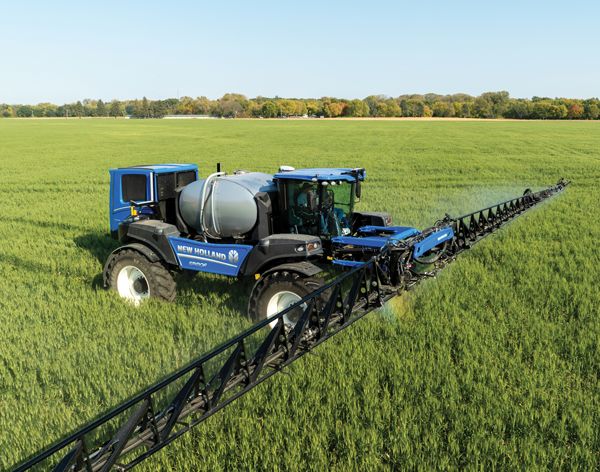
Why These Sprayers Stand Out
At their core, sprayers apply fertilizers and crop protection products — but self-propelled sprayers take precision and efficiency to the next level. Compared to smaller 3-point or pull-type boom sprayers, self-propelled units are built for large-scale operations where uniform coverage, speed, and accuracy matter most.
Technology Packed Into Every Inch
Modern self-propelled sprayers are loaded with sensors, automation, and data systems. From engine performance monitoring to Raven precision technology, every subsystem works to ensure optimal chemical application and fuel efficiency.
These machines use real-time data, GPS tracking, and automated systems to minimize overlap, reduce waste, and improve stewardship of inputs.
Precision Application Through Prescription Maps
Self-propelled sprayers often follow prescription maps created from yield data, drone imagery, or soil analysis to vary application rates across a field. Using GPS with RTK (Real-Time Kinematic) correction, these machines can achieve inch-level accuracy—reducing input costs and preventing over-application.
Learn more about precision tools and data on our precision agriculture resources page.
Individual Nozzle Control for Spot-On Spraying
A standout feature is nozzle-by-nozzle control. On large booms (90–120 ft), each nozzle can be controlled independently by solenoids to prevent overlap and save chemicals. Nozzles pulse dynamically on turns—outer tips increase flow while inner tips decrease—ensuring even coverage across complex maneuvers.
A trailing nozzle behind the rear wheel can re-apply spray where tires disturb coverage. Radar sensors mounted along the boom monitor ground height and automatically adjust nozzle height (typically between about 3 and 8 feet) to maintain a consistent pattern across varied terrain.
Related tech terms: variable-rate spraying, automatic boom control, nozzle modulation.
Adjustable and Maneuverable Design
Despite their size, these sprayers are engineered for versatility. Hydraulic suspension allows raising for tall crops or lowering for transport. Sensors adjust suspension height continuously to keep the boom level over uneven ground. With four-wheel steering, sprayers can achieve tight turning radii (around 18 ft), which helps in smaller or irregular fields common in central Pennsylvania.
Hydraulic wheel track adjustment lets operators match tire spacing to row width so tires travel between rows and avoid crop damage. This is especially useful for row crops such as corn.
Operator Comfort and Practical Features
From the cab, operators enjoy panoramic visibility and live monitoring of nozzle and boom status. In-cab displays show nozzle on/off states and mapping overlays. These sprayers also offer road speeds up to ~35 mph and convenient low-level fill ports, rinse lines, and additive hookups located beneath the chassis for safe, efficient refilling.
Choosing the Right Sprayer for Your Operation
Messick’s offers sprayer options for every scale—from compact 3-point sprayers to full-featured self-propelled models. Our sprayer specialists will help you choose the right configuration and technology package to maximize efficiency and ROI.